
Smart vs Traditional Digital Signage: The Ultimate 2026 Guide
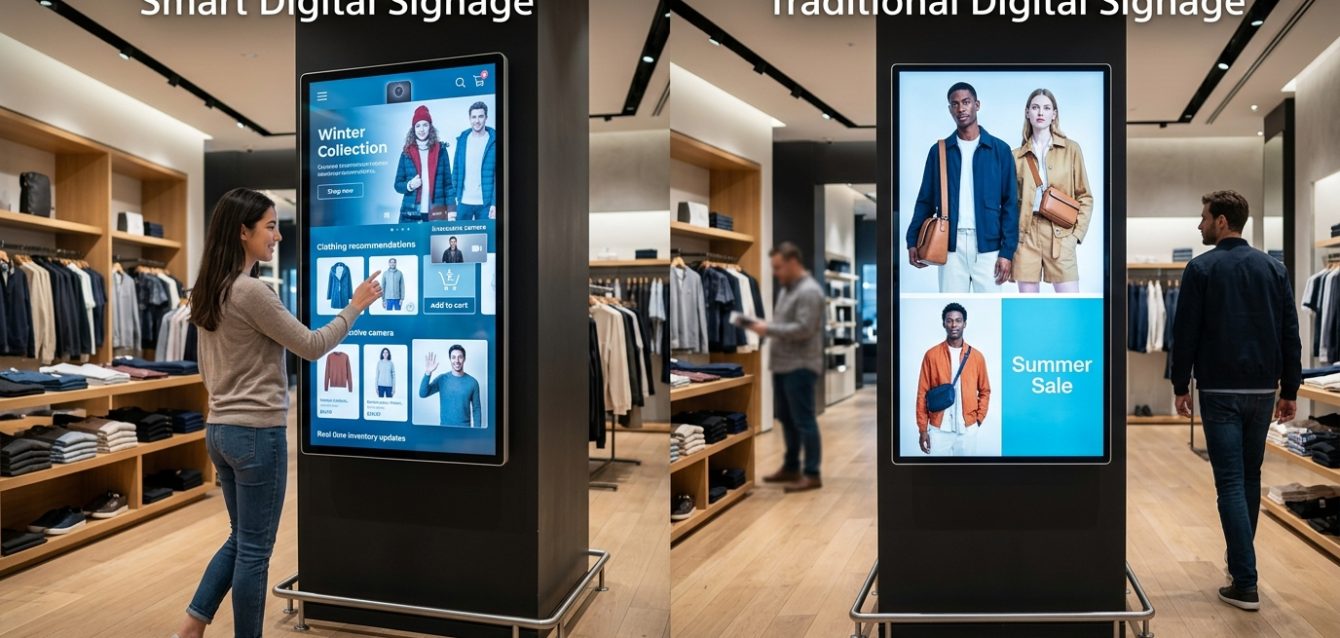
Are you tired of your screens displaying static messages that your customers simply ignore? When comparing smart vs traditional digital signage, the difference lies in how effectively you capture and hold attention in a busy physical environment. Traditional systems often rely on rigid, pre-scheduled loops that fail to account for the current context of your lobby or retail floor. Smart solutions use real-time data to adjust content based on who is actually standing in front of the screen at any given moment.
This guide provides a professional look at how to modernize your displays to drive better results and measurable returns. You will find practical advice on moving beyond simple playback to a system that responds to environmental cues. Understanding these differences helps you make a more informed investment for your facility or retail store. Incorporating intelligent software allows you to measure engagement and adjust strategies based on actual viewer behavior. By the end of this article, you will have a clear roadmap for updating your visual communication strategy to meet modern expectations.
What You Will Learn
- The technical differences between static loops and automated content delivery.
- How data analytics provide insights into viewer demographics and engagement levels.
- Strategic methods for updating your current display hardware and software.
- Ways to use environmental sensors to create personalized customer experiences.
- Practical steps to improve your return on investment through intelligent displays.
A Comparative Guide to Smart and Traditional Digital Displays
Moving from basic loops to intelligent content requires a clear understanding of how technology serves your business goals. Traditional setups rely on manual updates and fixed schedules, whereas smart systems react to real-time environment data. To transition effectively, focus on these core areas of implementation.
Define Your Data Points: Identify what information matters most. Smart systems use sensors to track foot traffic, dwell time, and audience demographics. Use these metrics to dictate what appears on screen at any given moment.
Automate Content Delivery: Static schedules are a thing of the past. Set up triggers based on inventory levels, weather patterns, or local events. This ensures your messaging remains relevant without constant manual oversight.
Integrate Best Smart Digital Signage Features: Focus on features like anonymous viewer analytics and heat mapping. These tools provide a clear picture of how customers interact with your space, allowing for more informed layout decisions.
Measure and Refine: Use the feedback loop provided by smart tech to adjust your strategy. If a specific promotion sees high dwell time but low conversion, you can change the creative assets instantly to test new approaches. This iterative process is the backbone of modern facility management.
Tips for Modernizing Your Digital Displays
Transitioning to intelligent displays involves more than just buying new hardware. It requires a shift in how you view customer interaction and space management. Use these expert tips to ensure your investment pays off quickly.
- Prioritize Dynamic Content: Avoid using your screens as static posters. Use motion and real-time updates to catch the eye and provide immediate value to your visitors.
- Focus on Audience Analytics: Understanding how does AI improve digital signage ROI is key to long-term success. Use data to prove which campaigns drive the most engagement, allowing you to allocate your marketing budget more effectively.
- Maintain Visual Consistency: While content should be dynamic, your aesthetic must remain clear. Ensure all automated content aligns with your professional standards.
- Optimize for Placement: Position your screens in high-dwell areas where people have time to absorb information. Use heat maps to identify these high-traffic locations within your facility.
- Test and Learn: Run A/B tests on different messages. Smart tech allows you to see which version performs better in real-time, removing the guesswork from your strategy.
Common Mistakes to Avoid
Many business owners fail to realize the full potential of their displays because of simple tactical errors. Avoiding these pitfalls will save time and resources.
Ignoring Real-Time Data: The biggest mistake is treating a smart screen like a traditional one. If you are not using the analytics provided, you are missing out on the primary benefit of the technology. Always act on the insights your system gathers.
Overcrowding the Screen: Too much information confuses the viewer. Keep messages simple and direct. Use one clear call to action per slide to ensure your audience knows what to do next.
Neglecting System Maintenance: Smart displays require regular software updates and connectivity checks. A blank screen or an error message damages your professional image and results in lost engagement opportunities.
Final Thoughts on Smart vs Traditional Digital Signage
Choosing between smart vs traditional digital signage comes down to your desire for actionable insights and improved efficiency. While traditional displays provide a basic visual presence, smart solutions offer a data-driven approach that directly impacts your bottom line. By moving toward automated, intelligent content, you ensure your business stays relevant in an increasingly digital world. Start today by reviewing your current display strategy and identifying areas where automation can take the lead. Share this guide with your management team to begin your modernization process.
Frequently Asked Questions
Q: What is the difference between smart and traditional digital signage?
A: Traditional digital signage displays a pre-set loop of content based on a fixed schedule, regardless of who is watching. Smart digital signage uses AI and sensors to adjust content in real-time based on the viewer’s demographics, current weather, or store inventory levels. This makes smart displays significantly more relevant and engaging for the specific audience present at any given moment.
Q: How does AI improve digital signage ROI?
A: AI improves return on investment by ensuring that the most impactful content is shown to the right people, which directly increases conversion rates. It also reduces manual labor by automating content scheduling and provides granular data that helps businesses optimize their messaging strategies. These efficiencies lead to higher sales and lower operational costs over time.
Q: Why should businesses switch to AI-driven digital signage?
A: Switching to AI-driven signage allows businesses to move from passive broadcasting to interactive, personalized communication that adapts to the physical environment. These systems can detect foot traffic patterns and viewer sentiment, allowing for immediate adjustments that improve the customer experience. Ultimately, this technology provides a competitive edge by making physical spaces as data-driven and responsive as e-commerce platforms.
Q: When is the right time to replace traditional digital displays?
A: You should consider replacing traditional displays when your current content feels stagnant or fails to drive measurable customer action. If your hardware is aging and cannot support real-time data integration or interactive sensors, it is likely time for an upgrade. Modernizing is especially important if you need detailed analytics to justify your marketing spend and prove the effectiveness of your campaigns.
Q: Which digital signage analytics are most important to track?
A: The most important analytics include dwell time, which measures how long a person looks at a screen, and the specific demographics of the viewers. Tracking engagement rates through interactions or QR code scans provides direct proof of content effectiveness. Additionally, comparing play logs with real-time sales data helps correlate specific content triggers with revenue growth.